


I Capture The Castle
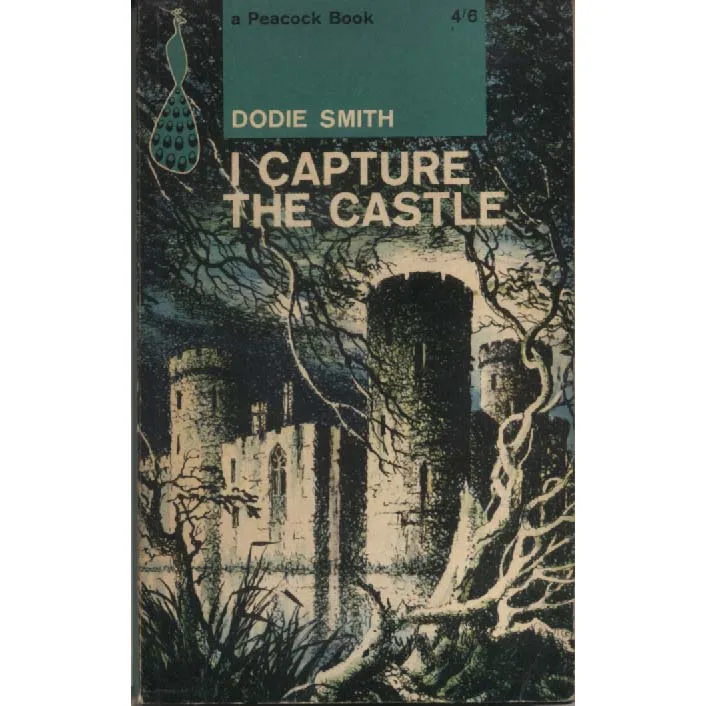
Publisher: Peack Books
Format: Paperback
ISBN: none
Some novels announce themselves with explosions, murders or international conspiracies. I Capture the Castle begins instead with a girl sitting in a kitchen sink writing in a diary, which sounds deeply unpromising until you realise that Dodie Smith has quietly lured you into one of the most charming, eccentric and emotionally dangerous books ever disguised as a cosy coming-of-age story.
First published in 1948 and here appearing in this splendidly weathered 1963 Peacock Books edition, I Capture the Castle is the literary equivalent of discovering an apparently crumbling country house is somehow still full of warmth, intelligence and faintly chaotic people living on boiled potatoes and artistic delusion. Which, conveniently, is more or less the plot.
The Mortmain family inhabit a half-ruined castle because apparently post-war British fiction operated under the assumption that all memorable families should be at least slightly impoverished and structurally unsound. Cassandra Mortmain, our wonderfully observant narrator, attempts to make sense of adolescence, love, class, money and the alarming unpredictability of adults while surrounded by a collection of gloriously impractical relations. Her father suffers from chronic writer’s block after producing one famous novel years earlier, her stepmother wanders about in artistic semi-transparency, and everyone seems permanently one unpaid bill away from complete collapse. In modern Britain they would almost certainly have a Channel 4 documentary made about them.
Dodie Smith writes with that rare and infuriating ease that makes genius appear accidental. The book is funny without trying too hard, romantic without becoming sugary, and painfully perceptive about the strange humiliations of growing up. Cassandra’s diary voice remains one of the great triumphs of English fiction: intelligent, hopeful, self-conscious, funny and quietly heart-breaking. She notices everything — particularly the gap between how people imagine themselves and what they actually are — which means the novel has aged far better than many supposedly more important literary works now gathering dust in university reading lists like abandoned Victorian radiators.
There is also the undeniable pleasure of its atmosphere. This is peak eccentric-English-life territory: tea trays, damp stone walls, emotional repression, unsuitable suitors, literary ambitions and the constant lurking awareness that nobody has any money. Yet unlike many nostalgic British novels, I Capture the Castle is too sharp to romanticise poverty completely. The castle may be picturesque, but cold baths remain cold baths. Hunger is still hunger, however poetically described.
And then there is this Peacock paperback itself, which feels exactly right for the novel. Mid-century paperbacks possess a particular honesty. They expected to be read in gardens, on buses, in boarding schools and under blankets with torches long after bedtime. This copy is in good condition, which is quietly miraculous given that books like this tend to be “borrowed permanently” by generations of readers who fully intend to return them and absolutely never do.
Crappy Old Books is therefore proud to present this survivor from an age when paperbacks smelt faintly of dust and possibility. The pages may have mellowed with time, but then so has the novel itself — becoming less merely beloved and more something approaching national emotional infrastructure. Few books understand youthful longing, family absurdity and the terrifying hopefulness of being alive quite so well.
So if you have ever wanted to spend time in a collapsing castle with eccentric intellectuals, impossible romances and one of the finest narrators in twentieth-century fiction, this old Peacock edition is ready to oblige. It may not literally help you capture a castle, but it will almost certainly capture your weekend, your emotions and possibly your entire bookshelf.
Keep browsing: See more Fiction books Other books by Dodie Smith
